Smart Ambulance: Treatment Begins Before Arrival
A connected ambulance with ambulance telemedicine lets a remote doctor see the patient's vitals and guide the crew while the vehicle is still moving, so the journey becomes part of treatment rather than a gap in it.
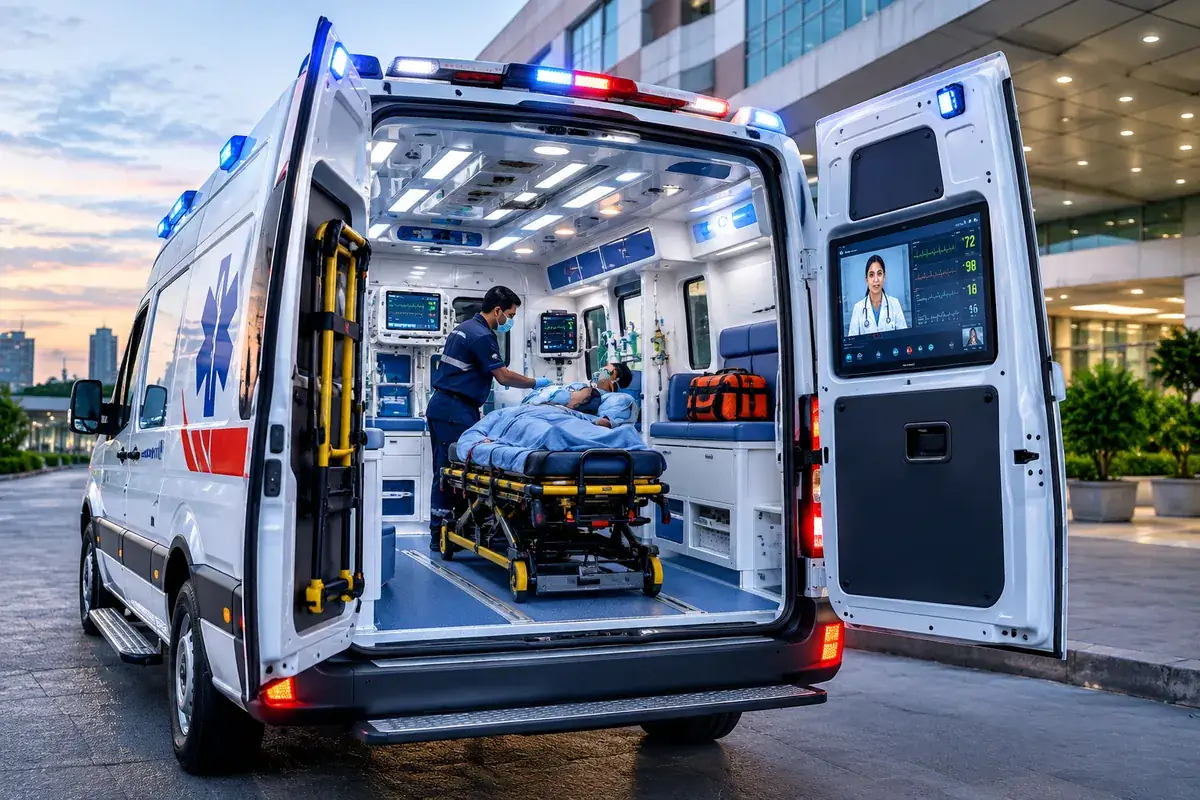
What your hospital gets
- Live vitals streamed from the ambulance to the receiving hospital's command centre
- A remote doctor guides the on-board paramedic throughout transit
- GPS tracking so the receiving team can prepare for the exact arrival
- Shortens the interval between pickup and hospital-based intervention
- Handover notes and vitals history travel digitally, ending paperwork delays at the door
Designed for
Ambulance telemedicine and connected emergency care
Ambulance telemedicine links the vehicle to a remote doctor through live vitals, location and communication. The paramedic on board keeps treating the patient, while the doctor watches the same numbers and advises. The receiving hospital sees the patient coming, with notes and vitals history ahead of arrival.
Smart Ambulance services add ambulance patient monitoring and real-time ambulance monitoring to emergency fleets and transfer services, so pre-hospital patient monitoring and emergency care coordination run as one connected system.
Go deeper: What is ambulance telemedicine? · Smart ICU for the receiving ward
Smart Ambulance – frequently asked questions
How does Smart Ambulance work?
The ambulance is fitted with live connectivity. A remote doctor watches the patient's vitals and guides the paramedic en route, while the same feed reaches the receiving hospital's command centre.
How does the receiving hospital know when to be ready?
GPS tracking gives the receiving team an accurate view of arrival time, and handover notes with vitals history move digitally ahead of the patient.
Who is Smart Ambulance designed for?
Inter-hospital transfers, emergency response fleets, and trauma and cardiac transport.
What is ambulance telemedicine?
Ambulance telemedicine connects a moving ambulance to a remote doctor through live vitals, location tracking and communication, so the patient can be guided and monitored en route rather than only on arrival.
Related reading
Put a specialist behind every bed.
Tell us how your ICU is monitored today. We reply within one business day.