By Sevril Health Team · · 2 min read
The idea
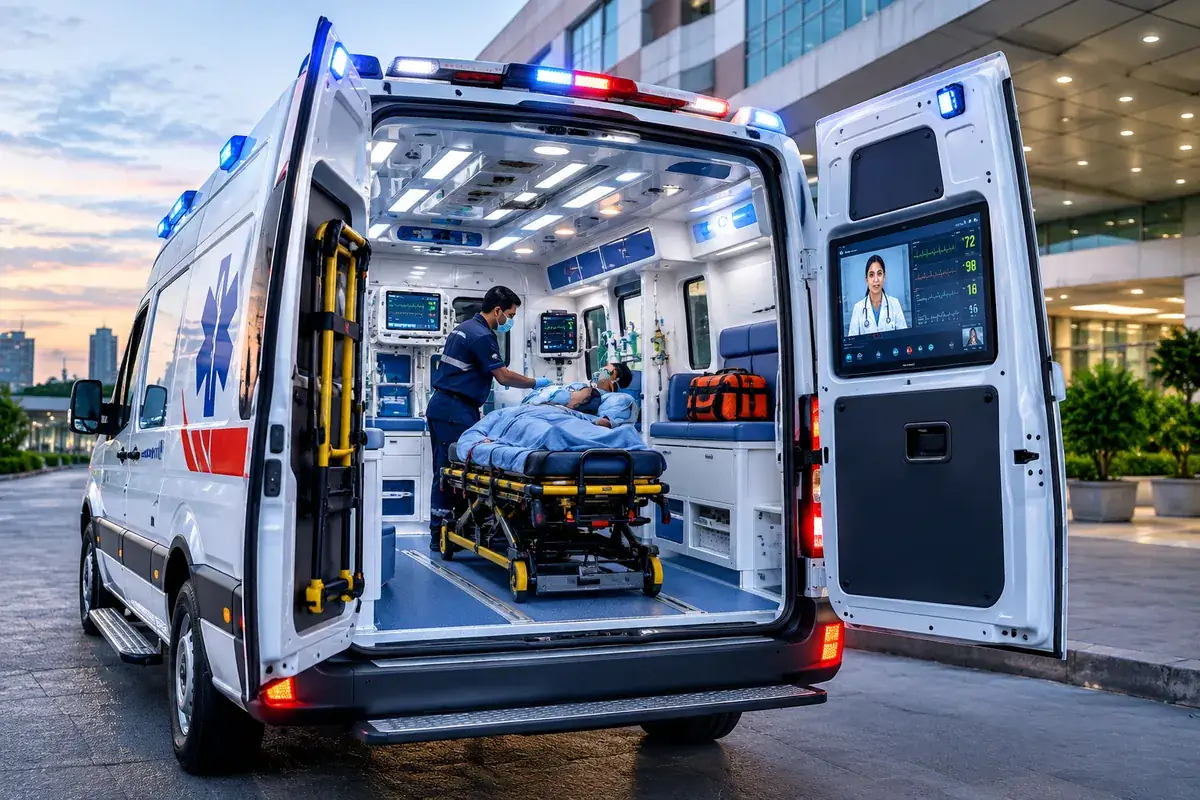
Ambulance telemedicine connects a moving ambulance to a remote doctor through live vitals, location and communication. The paramedic on board keeps treating the patient. The doctor sees the same numbers and guides the crew, so the journey becomes part of treatment rather than a gap in it.
How a connected ambulance works
- Live vitals. The patient's vitals stream from the ambulance to a remote doctor and to the receiving hospital's command centre.
- Remote guidance. The doctor advises the paramedic throughout transit.
- GPS tracking. The receiving team sees the vehicle and can prepare for the exact arrival.
- Digital handover. Notes and vitals history travel ahead of the patient, so paperwork does not delay care at the door.
Who it is designed for
- Inter-hospital patient transfers
- Emergency response fleets
- Trauma and cardiac transport
A practical limit
Live streaming depends on mobile connectivity along the route. A good deployment plans for patchy coverage and keeps the on-board crew able to act independently at all times.
Why it connects to the ICU
A patient whose condition is already known to the receiving team lands in a ward or ICU that is ready for them. Pairing a connected ambulance with Smart ICU keeps one record running from the road to the bedside.
Learn more on our Smart Ambulance page, or read The Intensivist Gap for why distance matters.
Wondering how this would work in your unit?
Tell us how your ICU is monitored today. We will explain which beds could be connected first and what your team would do differently on day one.
Request a callback Call +91 92882 14479