By Sevril Health Team · · 2 min read
What teleradiology is
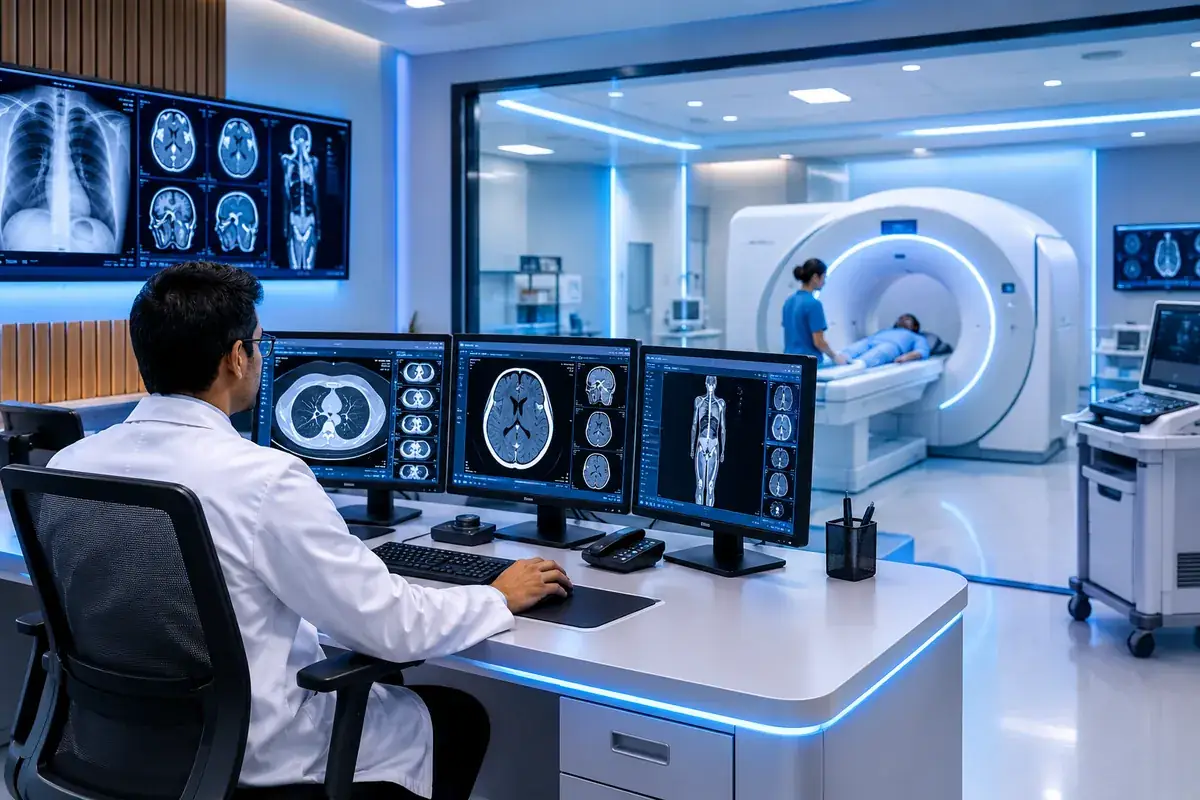
Teleradiology is the reporting of medical images by a radiologist who is in a different location. Studies travel digitally from your imaging equipment, the radiologist reads them remotely, and the report returns to your hospital. It lets a hospital offer reliable radiology reporting without keeping a specialist on site on every shift.
How it works
- The scan is taken. Your technologist performs the X-ray, CT or MRI as usual.
- The study transfers. Images move digitally from your imaging equipment to the reporting team over a secure link.
- Cases are prioritised. Time-critical studies, such as trauma and stroke, are handled first.
- A radiologist reports. An experienced, qualified radiologist reviews the study and writes the report.
- Critical findings are communicated. Urgent findings are called through to your team, not left in a queue.
- The report returns. Your clinicians receive it in time to act.
Where it helps most
- Overnight and weekend reporting
- Hospitals without a full-time radiologist
- Second-opinion reads on complex or borderline studies
- Fewer referrals made only to obtain a radiology opinion
What to verify before choosing a partner
- Radiologist qualifications and experience
- Turnaround expectations for routine and urgent studies
- How critical findings are communicated
- Data security and how images are transferred
Sevril's Smart Radiology supports X-ray, CT and MRI. For a decision guide, read Remote Radiology Reporting: When It Earns Its Place.
Wondering how this would work in your unit?
Tell us how your ICU is monitored today. We will explain which beds could be connected first and what your team would do differently on day one.
Request a callback Call +91 92882 14479