By Sevril Health Team · · 2 min read
Why the questions matter
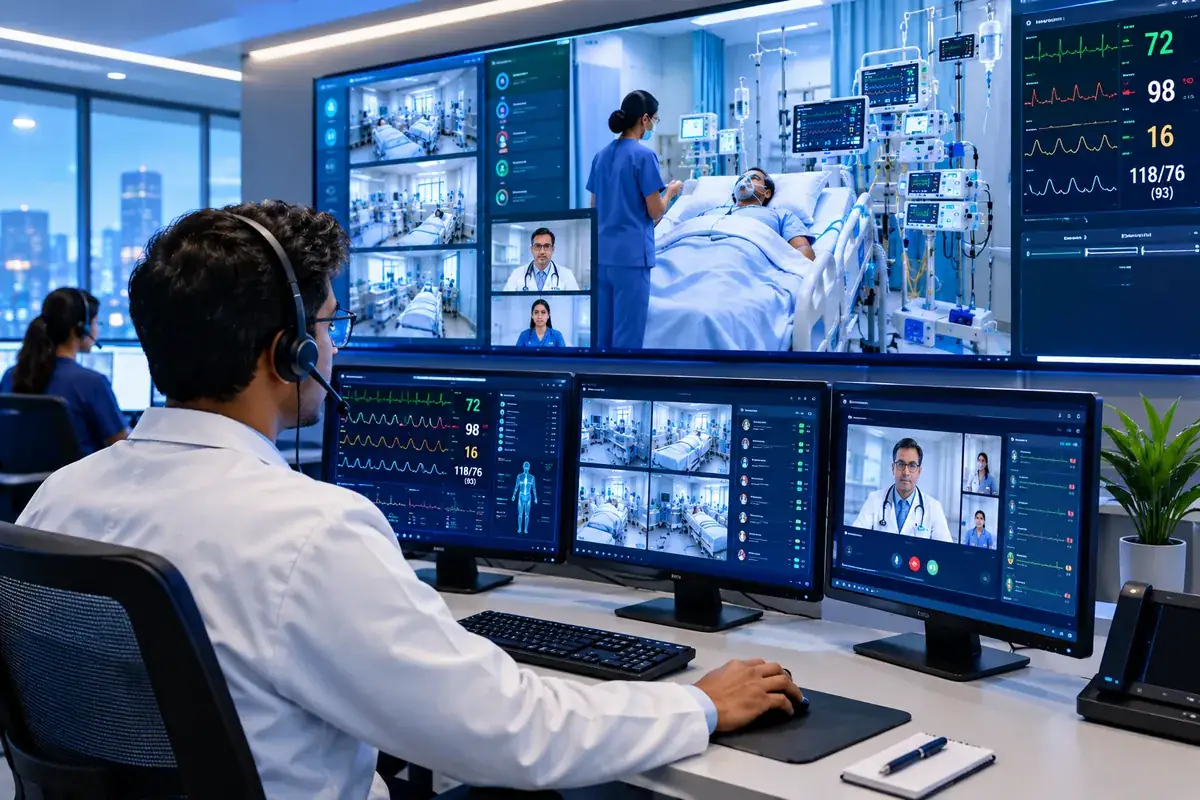
Providers use similar words: TeleICU, virtual ICU, remote ICU monitoring. Behind them, services can differ a lot, from screens that nobody is assigned to watch to full intensivist-led cover. These questions help you tell them apart.
The ten questions
- Who watches the beds? Ask for the roles and qualifications of the intensivists and nurses.
- Is it truly 24x7? Include nights, weekends and holidays.
- What happens when an alert fires? There should be a named path: acknowledge, assess, escalate.
- How fast is the response? Ask for a stated target for critical alerts. Sevril's is under 60 seconds.
- Does it work with our monitors? Replacing equipment adds cost and delay.
- Who stays in charge of treatment? It should be your treating doctor.
- What training is included? Nursing and duty-doctor training should be part of the deployment.
- How is data protected? Ask about security and who can see patient data.
- Can we start small? A pilot with a few beds lowers risk.
- What happens after go-live? Look for 24x7 technical and clinical support and regular review.
Red flags
- No named owner for alerts
- Cover that is "on request" and not continuous
- A requirement to replace working monitors
- Outcome promises without your own measurements
See how Sevril answers these in TeleICU services in India and Smart ICU. For the economics, read Smart ICU Economics.
Wondering how this would work in your unit?
Tell us how your ICU is monitored today. We will explain which beds could be connected first and what your team would do differently on day one.
Request a callback Call +91 92882 14479